Reviews
There are so many incredible books available at the moment that it is impossible to read them all, no matter how hard I try! Here are my thoughts about some of the books I have read and how I think they could be used in school as well as Q and A sessions with authors and illustrators.
The Fantastical Safari
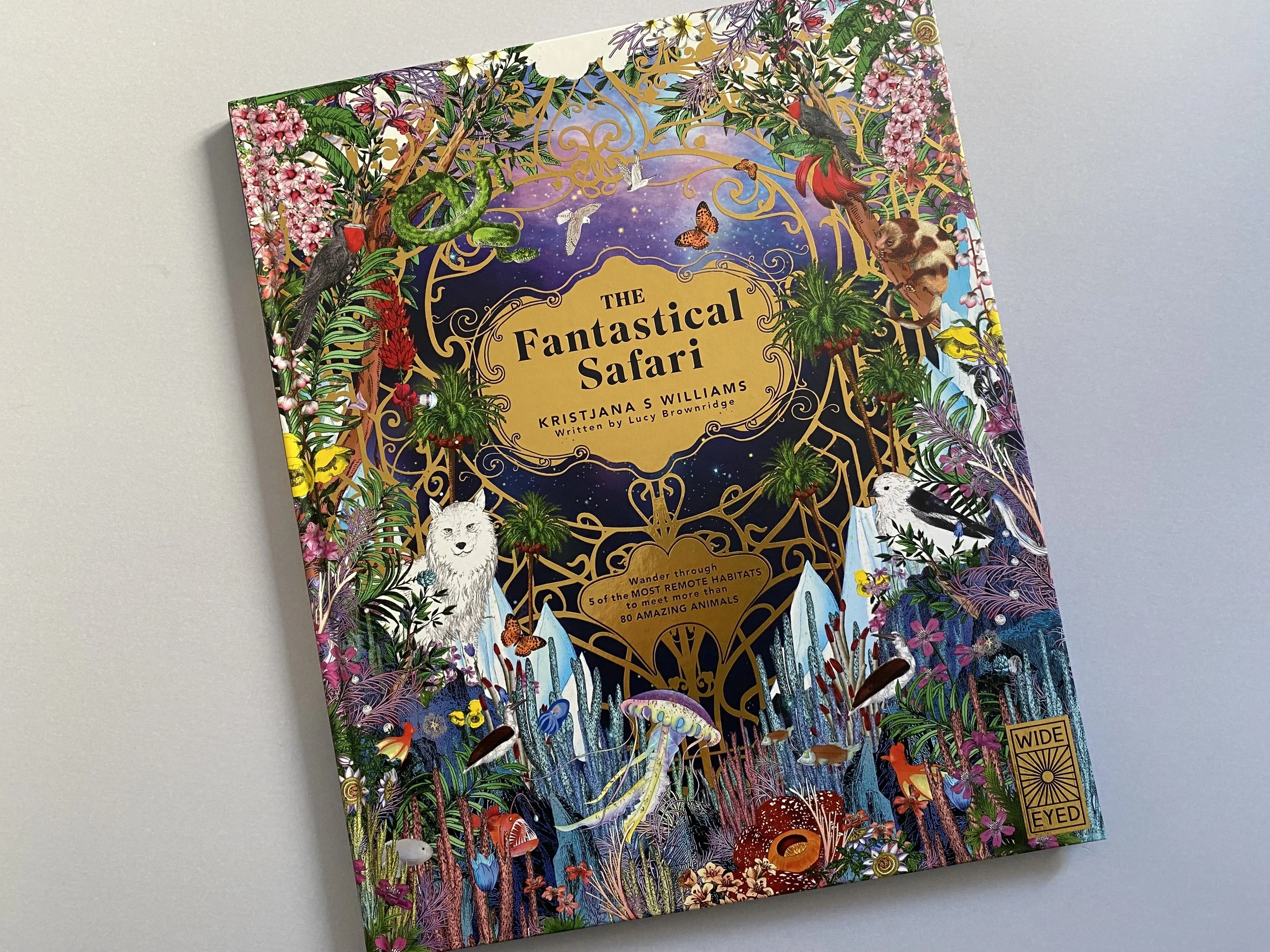
‘The Fantastical Safari’ is a stunning book which takes readers on an incredible journey to five of the most remote habitats in the world. The illustrations are stunning, making this a book to treasure for adults and children alike.
The safari travels to the depths of the Marina Trench, along the Greenland Ice Sheet to the Highlands of Papua New Guinea, the Galapagos Islands and then finally to the Tenere region of the Sahara Desert. Each location is carefully introduced with its terrain and climate described before exploring the creatures which live there and how they have adapted to survive in those conditions.
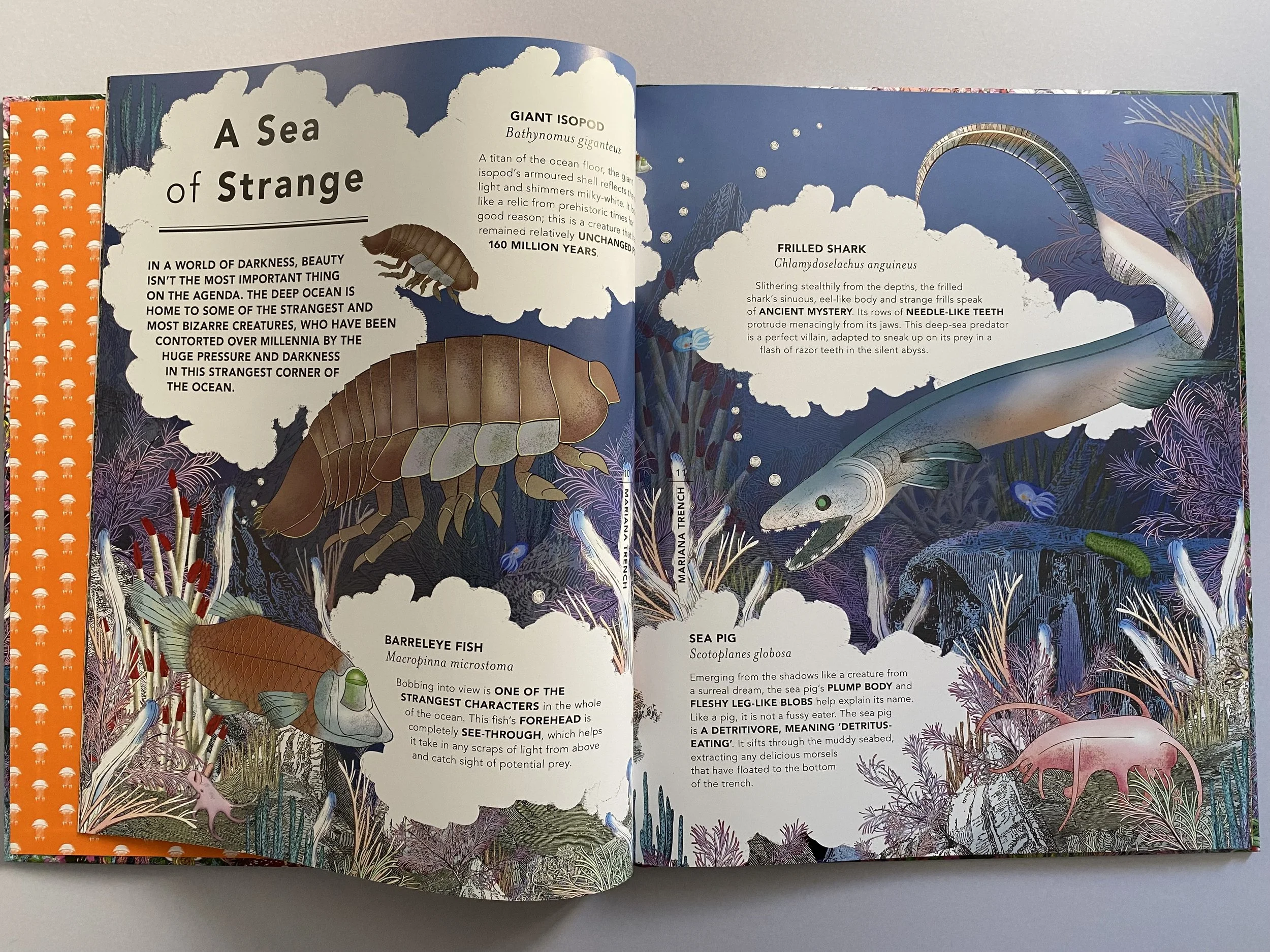
Perfect for enriching and adding interest to the science curriculum, the book supports many of the things which children should be taught in the Living Things and their Habitats and Evolution and Inheritance strands. Beautiful books like this one enhance the subject, encouraging children to value them. The Galapagos Islands are often chosen as a focus for learning in geography- location, physical features, mapping skills etc- and this book encourages them to look both at and beyond this to develop their knowledge and understanding of the world.
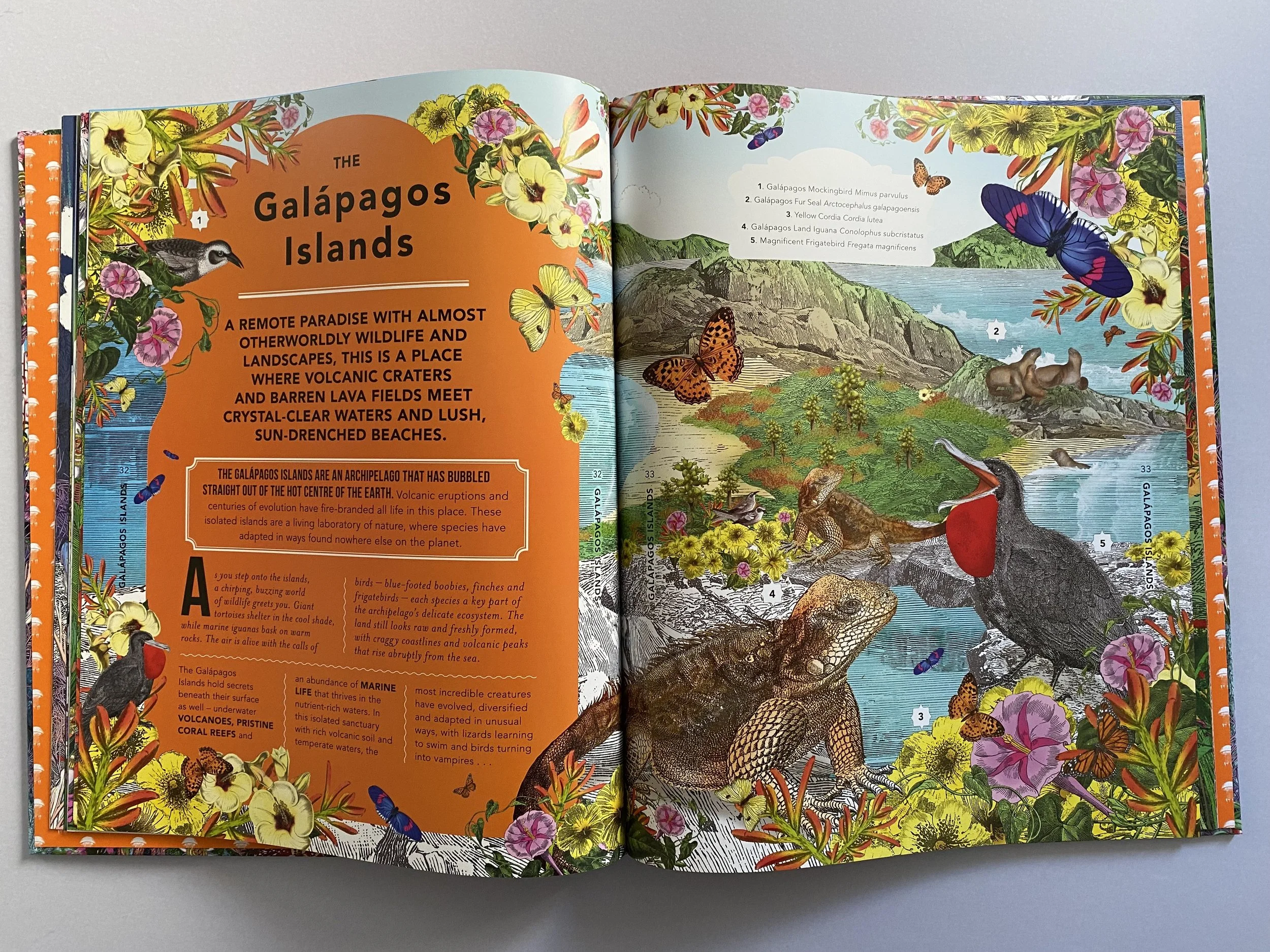
Both beautiful and fascinating, this is a book to treasure!
The Fantastical Safari
Kristjana S Williams, written by Lucy Brownridge
Wide Eyed ISBN: 978-0711296725
The Coming of the Iron Man

In ‘The Coming of the Iron Man’, the first three chapters of Ted Hughes’ much loved classic, ‘The Iron Man’ have been abridged for younger readers and brought to life by Mini Grey’s fabulous illustrations.
Having read ‘The Iron Man’ to many classes over the years, I know how much they enjoy the opening scene where the Iron Man appears for the first time, falls down the cliff and rebuilds himself before disappearing into the sea. The richness of the language with its use of onomatopoeia, personification and repetition make it a joy to read aloud and Mini Grey’s wonderful pictures bring the story vividly to life for readers young and old.
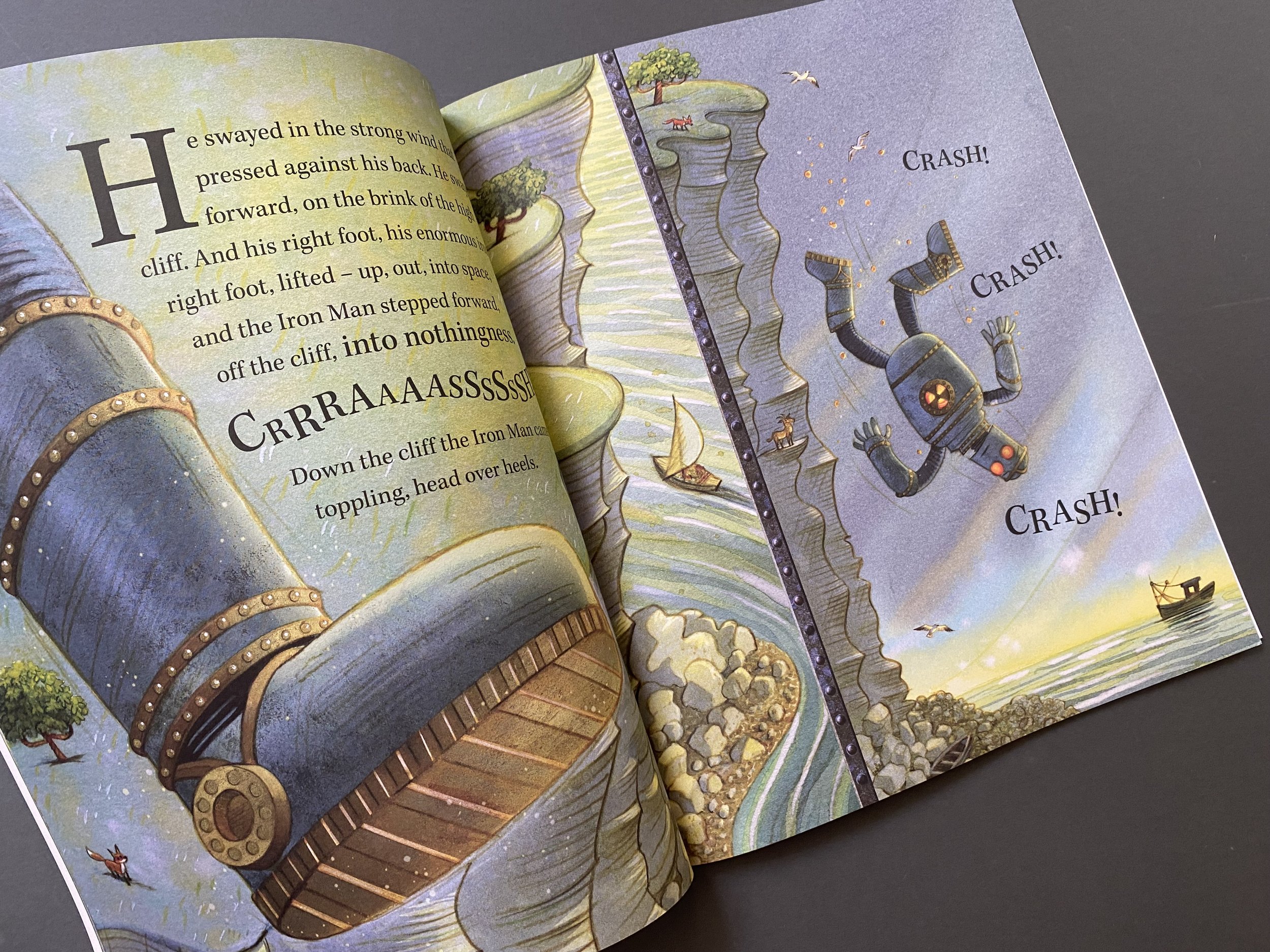
Many of the illustrations could be used to generate ideas about characters. The one of Hogarth waiting in the tree, for example, could be used as a place to pause and explore what he might be thinking at this point, children adding their thoughts on post-it notes. Children could explore their ideas about the appearance of the Iron Man, comparing their own thoughts to Mini Grey’s portrayal whilst looking at the text for any given details.
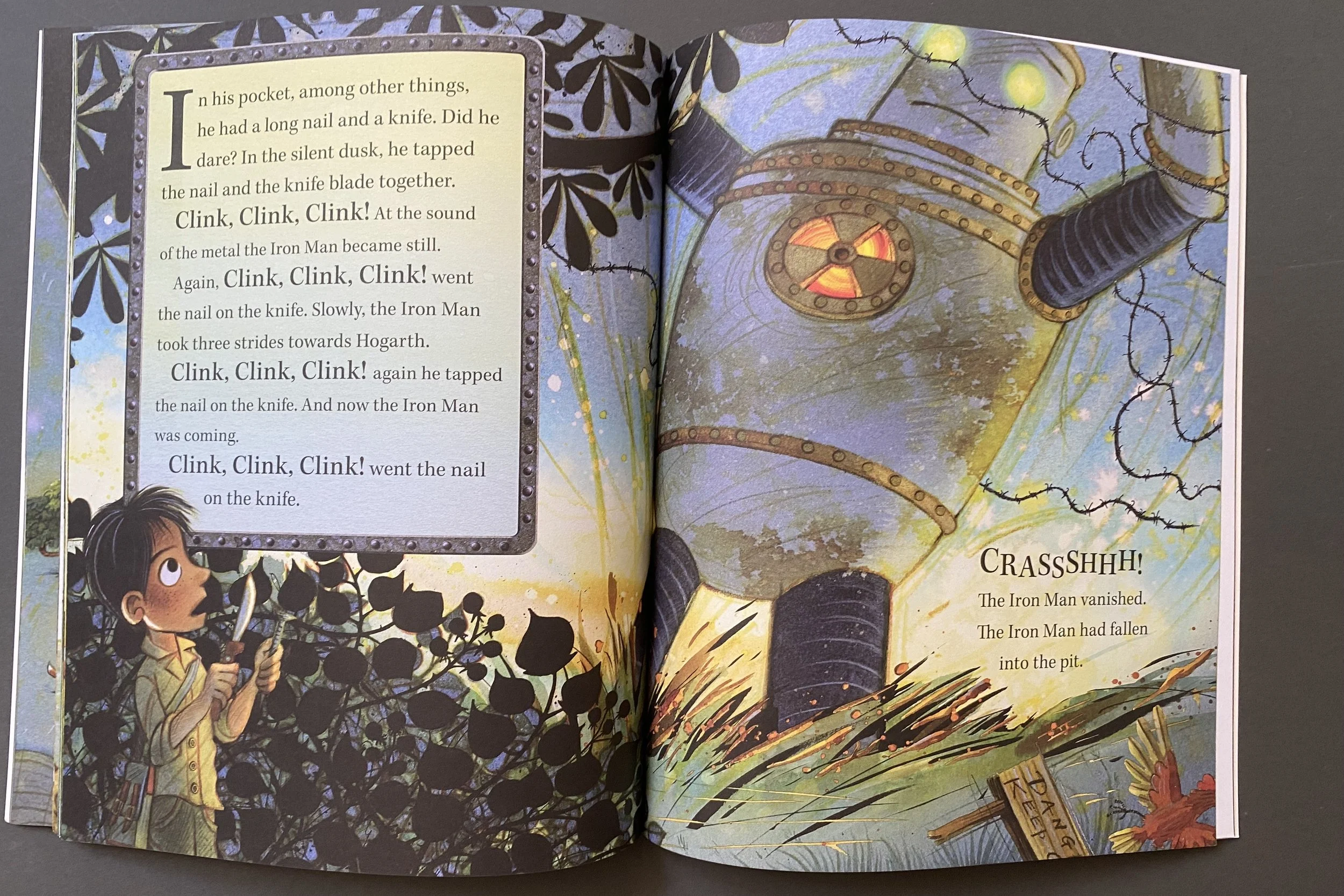
Through beautifully illustrating this classic story, Mini Grey has made ‘The Iron Man’ accessible to younger children, perhaps leading them to read the full story when they are older.
The Coming of the Iron Man
Ted Hughes, illustrated by Mini Grey
Faber ISBN: 978-0571382736
Publishing 14th August 2025
Choose Your Own Evolution
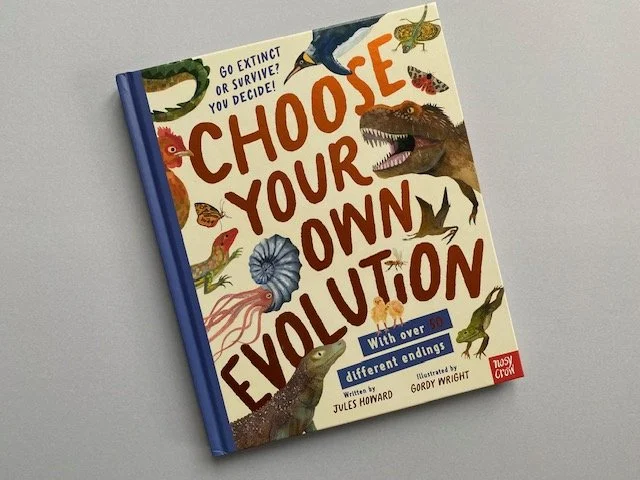
Using a ‘pick-your-own-path’ format, ‘Choose Your Own Evolution’ offers a really unique and engaging exploration of life on Earth. It is an incredibly engaging and accessible read!
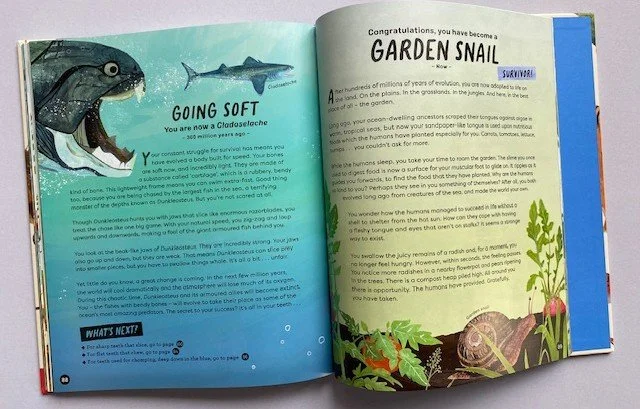
‘The Journey’ Begins’ sets the scene, explaining that every animal has a secret history- their evolution - and that readers will be offered choices to decide their fate. Starting as a Dickinsonia, a tiny blob, three pathways are offered to set off on the evolutionary journey. Deciding that slime is my ‘style’, led to becoming a ‘Helcionellid’ where, faced with five further choices, I selected ‘Get ahead of the game’ and turned to page 89. Here, I learned that I was a survivor, having become a garden snail! However, some pathways lead to extinction, the fate of Megalodon or Titanoboa, making this an interactive and engaging read, allowing readers to learn without realising!
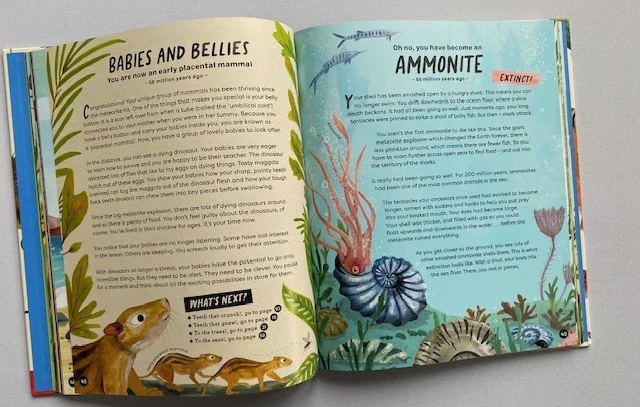
Bursting with facts, the book is also beautifully presented, with colourful, thoughtfully placed illustrations. It is perfect for enriching the KS2 science curriculum, adding a game-like element to learning, sure to provoke discussion about the choices on offer and the outcomes they result in. An evolutionary family tree included at the end of the book supports readers in following the stages each creature in the book has followed and a glossary offers concise definitions of the ‘technical’ terms related to the subject.
An excellent read!
Choose Your Own Evolution Go Extinct or Survive? You Decide!
Jules Howard, illustrated by Gordy Wright
Nosy Crow ISBN: 978-1839945533
Beautiful: A Celebration of Evolution
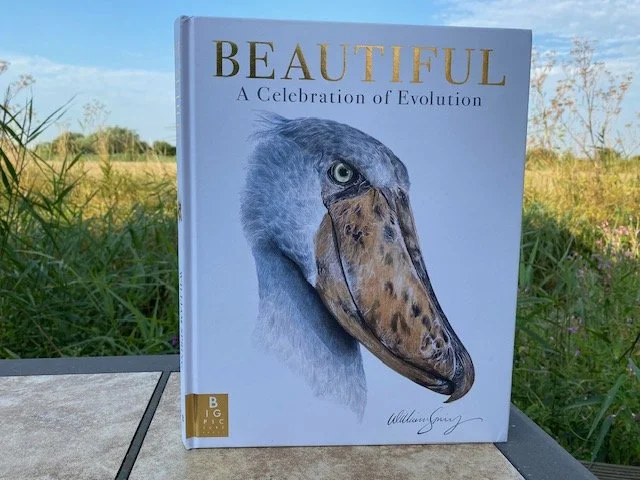
Illustrated throughout with stunning watercolours, ‘Beautiful’ is a very special book. The author sets out to show that ‘in nature, the word ugly simply does not apply’ as adaptation and evolution have have created incredible, unique creatures, each of which is beautiful.
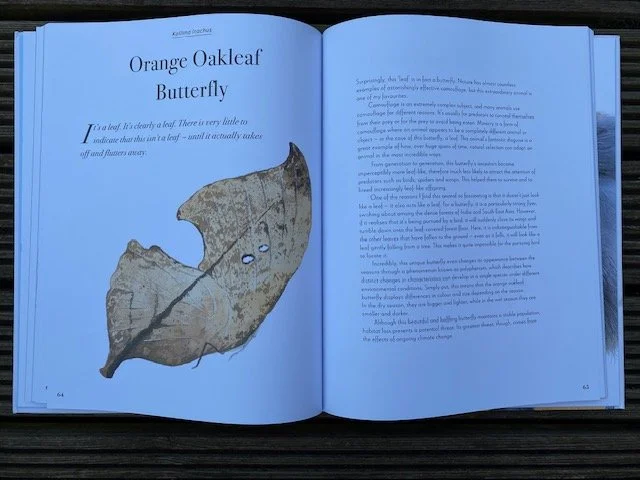
A wonderful array of creatures are presented in alphabetical order, starting with the Aldabra Giant Tortoise and ending with the Wild Boar. Some of these entries are not the typical ‘cute and cuddly’ animals often featured in books, but each is held up as something to be admired and appreciated by the author.
Each spread offers beautiful illustrations, its binomial nomenclature and a wealth of information. Not only is the creature described, but details about how it has adapted are given. The Indian pangolin’s tongue, for example, has evolved to be longer than the creatures head and body combined and is connected to the bottom of the ribcage. The shoebill has adapted to survive in the dangerous swamps of easter Africa; a very aggressive creature, it uses its huge beak with a hooked end for spearing its prey. One of my favourite animals, the duck-billed platypus, can detect its prey through picking up tiny electric pulses from other animals, using special nerve cells in its bill. Sadly, the author notes where these creatures are endangered or their at risk from climate change and habitat destruction.
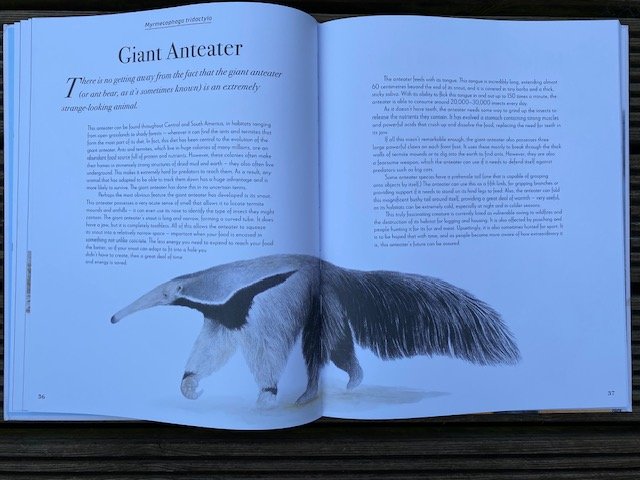
Completely fascinating, this book would add much to the knowledge and understanding of those studying evolution and adaptation as part of the Science Curriculum both in Y6 and in KS3. Each entry supports the statement: ‘Pupils should be taught to identify how animals and plants are adapted to suit their environment in different ways and that adaptation may lead to evolution’ in a meaningful and engaging way, whilst developing a respect for, and understanding of, these incredible creatures.
A very special, very beautiful book!
Beautiful: A Celebration of Evolution
William Spring
Big Picture Press ISBN: 978-1800786165
Published 1st August 2024